



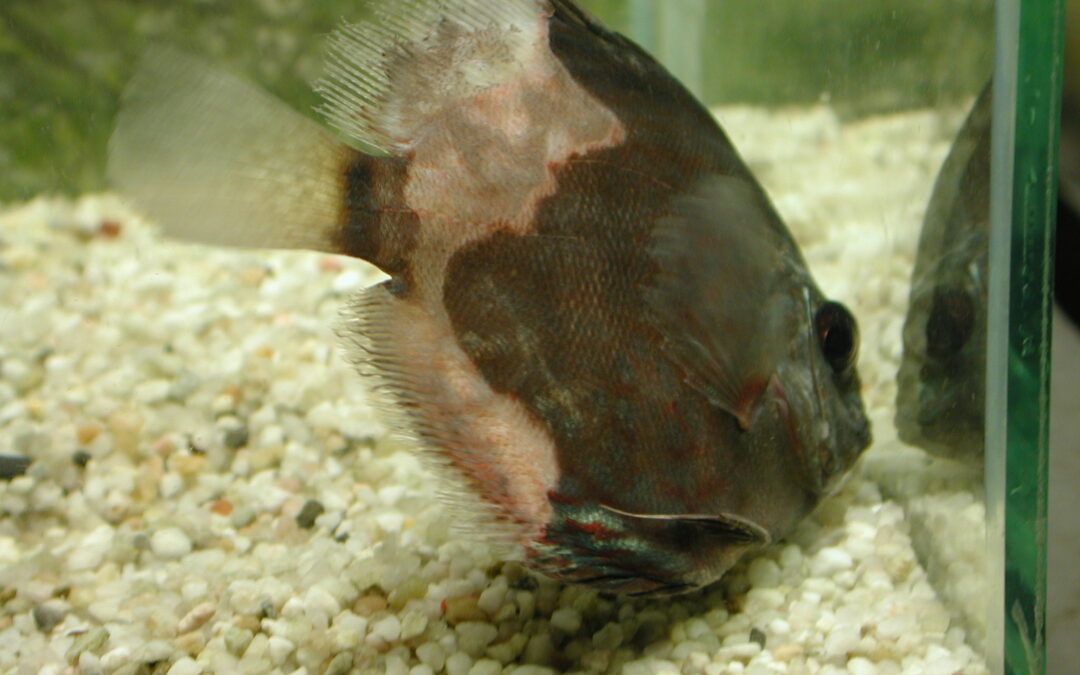
A fish that looked normal three days ago now has ragged fins, pale edges, and less confidence at feeding time. That is how fin rot in aquarium fish often starts – not as a dramatic emergency, but as a gradual sign that something in the system is no longer supporting normal tissue health.
The mistake is to treat the fins first and ask questions later. Damaged fins are often the visible result of a broader problem: chronic stress, poor water quality, unstable temperature, social pressure, transport damage, or a secondary bacterial infection taking advantage of weakened tissue. If you want reliable results, you need to diagnose the situation, not just react to the symptom.
What fin rot in aquarium fish really means
Fin rot is not one single disease with one single cause. It is a descriptive term for progressive fin tissue deterioration. In practice, that deterioration may begin after mechanical injury, fin nipping, ammonia exposure, poor hygiene, or chronic stress that weakens the skin and fin barriers. Once the tissue is compromised, opportunistic bacteria can colonize it.
This distinction matters. A fish with minor frayed fins from aggression does not need the same response as a fish with rapidly melting fins, inflamed fin bases, and body ulcers. Too many fishkeepers jump straight to medication, only to miss the husbandry error that caused the damage in the first place. That delays recovery and often leads to repeat cases.
In advanced situations, fin rot can extend from the outer fin margins toward the base. The edges may look white, bloody, blackened, or fuzzy depending on the stage, tissue death, and whether fungal growth or debris is present. Once the inflammation reaches the fin base, the case is more serious and the fish is at greater risk of systemic infection.
Early signs to watch for
The earliest sign is usually subtle fraying or shortening of the fins, especially in species with long or delicate finnage. You may also notice that the fin edges lose their clean outline and appear uneven, milky, or slightly opaque. In some fish, the fins are clamped before obvious erosion appears.
Behavior often gives useful clues. Affected fish may hold back from stronger tankmates, rest more, or stop displaying normally. Appetite may still be present in mild cases, which can give a false sense that the fish is fine. In professional-level fish health work, visible lesions and behavior must always be read together.
When it is likely more than simple fin damage
If the fins are disappearing quickly over 24 to 72 hours, if the base of the fin is red or swollen, or if there are additional signs such as excess mucus, ulcers, flashing, respiratory stress, or bloating, think beyond uncomplicated fin rot. External parasites, poor water chemistry, and mixed infections can all sit behind fin erosion. In those cases, treating only for bacteria may not solve the problem.
The most common root causes
Poor water quality remains the leading driver. Elevated ammonia or nitrite injures delicate tissue directly. Long-term nitrate accumulation, heavy organic waste, and inadequate maintenance reduce the fish’s ability to heal and favor opportunistic microbes. Even if your test results look acceptable on one day, a pattern of unstable conditions may be the real issue.
Social stress is another frequent cause. Fin nippers, overcrowding, poor species mixing, and inadequate shelter create constant low-grade trauma. In community tanks, the fish with damaged fins is not always the original problem. Sometimes the true issue is aggression from a tankmate that looks perfectly healthy.
Temperature and oxygen also matter. Fish kept outside their preferred range often show reduced immune resilience and slower tissue repair. In warm, heavily stocked aquariums with limited aeration, bacterial growth can increase while fish tolerance decreases.
Handling and transport injuries should not be ignored either. Torn fins from nets, rough capture, sharp décor, or abrasive spawning surfaces can become infected if water quality is not excellent during recovery.
How to assess the case before treating
Start with the environment. Test ammonia, nitrite, nitrate, pH, and temperature. Review recent changes such as new fish, new décor, missed maintenance, overfeeding, filter cleaning, medication use, or aggression. In many cases, the history tells you as much as the lesion.
Then study the pattern of damage. Is it symmetrical or limited to one fin? Are the edges cleanly split, which suggests injury or nipping, or are they dissolving and inflamed, which suggests active tissue breakdown? Is the fish otherwise alert, or is the whole animal compromised?
If several fish are affected, think system-wide stress first. If one fish is affected and others are intact, consider injury, bullying, or individual weakness. This is where disciplined observation saves money and reduces unnecessary treatment.
Treatment for fin rot in aquarium fish
The first treatment step is almost always environmental correction. Improve water quality immediately with appropriate water changes, waste removal, and stable filtration. Increase aeration if needed. Remove obvious stressors such as aggressive tankmates or hazardous décor. A fish cannot regrow healthy fins in a poor environment.
For mild cases with limited fraying and no fin-base inflammation, supportive care and clean water may be enough. Many fish recover without aggressive medication once the cause is removed. New growth often appears transparent at first, then gradually regains normal color and structure.
When medication is justified
If fin erosion is progressing, the margins are inflamed, the base is involved, or the fish shows broader signs of bacterial disease, targeted treatment becomes more reasonable. The exact product choice depends on the fish species, the severity, water temperature, whether the fish is in a display tank or quarantine, and what other signs are present.
This is where caution is needed. Not every broad-spectrum antibacterial is suitable for every setup. Some treatments affect biofiltration, some stress sensitive species, and some are used far too casually without solving the underlying husbandry fault. If the diagnosis is uncertain, indiscriminate treatment can waste time and money while the fish declines.
Salt is sometimes helpful as supportive care in selected freshwater cases, particularly when osmoregulatory stress is part of the picture, but it is not a universal answer. It depends on species tolerance, the tank’s plant and invertebrate load, and whether the primary problem is actually bacterial, parasitic, or environmental.
Hospital tank or display tank?
A hospital tank is useful when the fish needs close observation, reduced competition, and controlled treatment. It also protects the main biofilter from medications that may interfere with bacterial balance. For large systems, koi setups, or multi-fish outbreaks, treating the whole environment may be necessary, but only after confirming that the issue is not limited to one injured fish.
What recovery should look like
True recovery is not just the absence of further decay. The fin edge should stabilize, redness should fade, behavior should normalize, and new fin tissue should begin to extend. In some fish, full regrowth takes weeks. In severe cases, the original fin shape may never return completely.
Do not assume a fish is cured because the fin stopped getting worse for one day. Continue monitoring water quality, appetite, social behavior, and lesion appearance. Relapse usually points to an unresolved cause, not bad luck.
Preventing repeat cases
Prevention is mostly about system discipline. Stable water quality, species-appropriate stocking, good nutrition, careful quarantine, and low-stress handling reduce the majority of fin problems before they start. Fish with excellent environmental support resist opportunistic infections far better than fish living at the edge of tolerance.
Quarantine is especially valuable for fishkeepers managing high-value stock, breeding groups, or professional systems. New fish may arrive with minor transport damage that becomes problematic only after introduction into a busy aquarium. A quiet observation period lets you separate injury from infectious disease and respond with more precision.
Routine observation should become part of normal husbandry. Watch fins during feeding, note subtle changes in posture and social rank, and act early. Small fin lesions are easier to reverse than advanced tissue loss.
For keepers who want to sharpen their diagnostic approach, this is exactly where expert-led fish health education makes a difference. Fin erosion is common, but common does not mean simple. The best results come from understanding what the fins are telling you about the whole fish and the whole system.
When you see fin damage, resist the urge to reach for the first bottle on the shelf. Slow down, read the case properly, and correct the cause with the same seriousness as the symptom. That habit protects fish, prevents avoidable losses, and makes every treatment decision more effective.
Recent Comments