



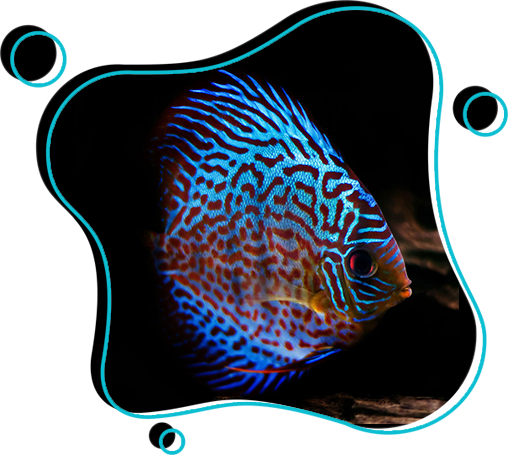
A fish dies, then another starts flashing, and within days the entire system feels unstable. That is usually the moment people start searching for the best fish disease course. The problem is that most training in this space is either too shallow to improve outcomes or too academic to help when fish are already declining.
A useful course does not just name diseases. It teaches you how to observe, interpret, and act in the right order. Whether you manage a home aquarium, a breeding room, a retail system, or a farm, the standard should be the same – better decisions through better diagnostics.
What the best fish disease course should actually teach
The first test of any course is simple. Does it train pattern recognition, or does it just present information? Fish health is rarely solved by memorizing a photo chart. White spots, ulcers, excess mucus, clamped fins, darkening, buoyancy problems, and sudden mortality can each point to multiple causes.
A serious course should show how to move from symptom to differential diagnosis. That means understanding the difference between primary disease, secondary infection, environmental stress, nutritional weakness, and management error. If a program skips that diagnostic discipline, it may be easy to consume, but it will not reliably improve fish welfare.
The next requirement is prevention. Many fishkeepers still approach disease education as if treatment is the center of the field. In practice, the strongest training spends substantial time on water quality, stocking density, quarantine, biosecurity, transport stress, feeding strategy, and early warning signs. Fish disease control begins long before medication is considered.
It should also teach limits. Not every fish can be saved. Not every lesion has a single cause. Not every treatment should be started immediately. Good education reduces guesswork, but it also helps you recognize uncertainty and respond methodically rather than emotionally.
Best fish disease course options are defined by method, not marketing
When people compare fish health education, they often focus on production value, length, or how much content is promised. Those details matter less than method. The best fish disease course is the one that changes how you examine a case.
Look for training built around real diagnostic workflow. A strong program will start with observation of behavior and external signs, then move to environmental review, recent history, feeding changes, new fish introductions, and progression over time. More advanced instruction should include microscopy, parasite recognition, interpretation of gill and skin findings, and the reasoning behind treatment selection.
This is where many general aquarium courses fall short. They may be useful for basic husbandry, but fish disease work requires a more disciplined structure. A keeper who learns to ask the right questions will outperform someone who only collects medication names.
There is also a difference between advice designed for social media and education designed for case management. Short-form content may help you recognize a familiar problem, but it rarely teaches you what to do when signs overlap, the presentation is incomplete, or several stressors are active at once. Disease training should prepare you for messy reality, not just textbook examples.
How to assess course quality before you commit
Start with the instructor. Fish health is a field where experience matters because case interpretation improves through repetition. You want evidence of long-term practical work with diseased fish, not just general aquarium knowledge or broad animal science credentials. An instructor who has spent decades diagnosing real cases will usually teach in a more precise and more useful way.
Next, assess the balance between theory and application. If a course is all science vocabulary without practical decision-making, many learners will struggle to apply it. If it is all anecdotal advice without biological explanation, it may lead to poor treatment habits. The best training connects observation, pathology, environment, and intervention in a way that can be used immediately.
Pay attention to whether the material is organized progressively. Beginners need structure. Advanced keepers also need structure, but at a different depth. Good courses start with the foundations of fish physiology, stress, immunity, and common clinical signs, then build toward differential diagnosis, microscopy, outbreak response, and prevention systems. Random topic libraries can be informative, but they are not always good education.
Format matters too, but only in relation to the learner. Video can be excellent for demonstrating behavior, lesions, and microscope findings. Written guides are often better for reference and repeat use. Step-by-step tutorials are especially valuable because disease work is sequential by nature. The strongest learning environments combine explanation with visual evidence and practical protocols.
Why diagnostic thinking matters more than treatment lists
Many people searching for disease training are really searching for treatment confidence. That is understandable, but treatment confidence without diagnosis is dangerous. The same fish can appear to improve briefly under the wrong treatment because stress changes, secondary bacteria decline, or disease progression naturally fluctuates. That does not mean the original problem was correctly identified.
A better course teaches you to slow down and gather evidence. Is the fish still eating? Are the gills moving rapidly? Did signs begin after transport, aggression, spawning, or maintenance? Are all species affected equally? Is mortality sudden or prolonged? These details are not background noise. They are the diagnostic pathway.
This is also where serious fishkeepers separate themselves from reactive keepers. The goal is not to become dependent on constant intervention. The goal is to become capable of distinguishing emergency treatment from management correction, and probable infection from stress-induced decline.
The best fish disease course for beginners versus advanced keepers
It depends on where you are starting. Beginners often need a course that teaches observation, quarantine, common disease categories, and how to avoid panic-driven decisions. They benefit from clear frameworks and repeated examples. Without that foundation, advanced disease content can become overwhelming and lead to overdiagnosis.
Advanced keepers, breeders, and aquaculture operators usually need more than a symptom guide. They need training that addresses recurring loss patterns, biosecurity design, microscopy, mixed infections, and the relationship between husbandry pressure and disease expression. They also need help refining judgment, because in larger systems the cost of the wrong decision is higher.
The best option is often not the one with the broadest promise. It is the one that matches your current level while still allowing progression. A beginner should not be trapped in superficial content. An advanced keeper should not pay for entry-level material dressed up as expertise.
What serious fish health education looks like in practice
Real fish disease training is practical, but not simplistic. It teaches you to observe fish before feeding, compare normal and abnormal respiration, identify subtle posture changes, read skin condition, and notice when behavior shifts before external lesions appear. It also teaches restraint, because unnecessary treatment can damage fish, biological filtration, and future diagnostic clarity.
Strong education also reinforces that disease is often multifactorial. Parasites, bacteria, water instability, handling stress, poor diet, and social pressure do not exist in isolation. The experienced practitioner learns to rank causes, not chase every possibility at once.
That is why expert-led platforms built around case-based teaching are often more valuable than scattered articles or forum opinions. When the instruction comes from a fish health specialist with decades of diagnostic experience, the learner gains something more useful than information – they gain a framework. Gerald Bassleer’s educational approach is a strong example of this standard because it emphasizes practical diagnosis, prevention, and informed care rather than superficial treatment advice.
A final standard to use before you choose
If a course leaves you better at observing fish, thinking through causes, and preventing repeat losses, it is doing its job. If it mainly gives you disease names and product suggestions, keep looking. The right training should make you calmer, more precise, and more effective when fish health problems appear.
Choose education that respects the complexity of disease without making the subject inaccessible. Fish do better when their keepers learn to diagnose before they medicate, prevent before they react, and keep asking better questions every time a case appears.
Recent Comments