



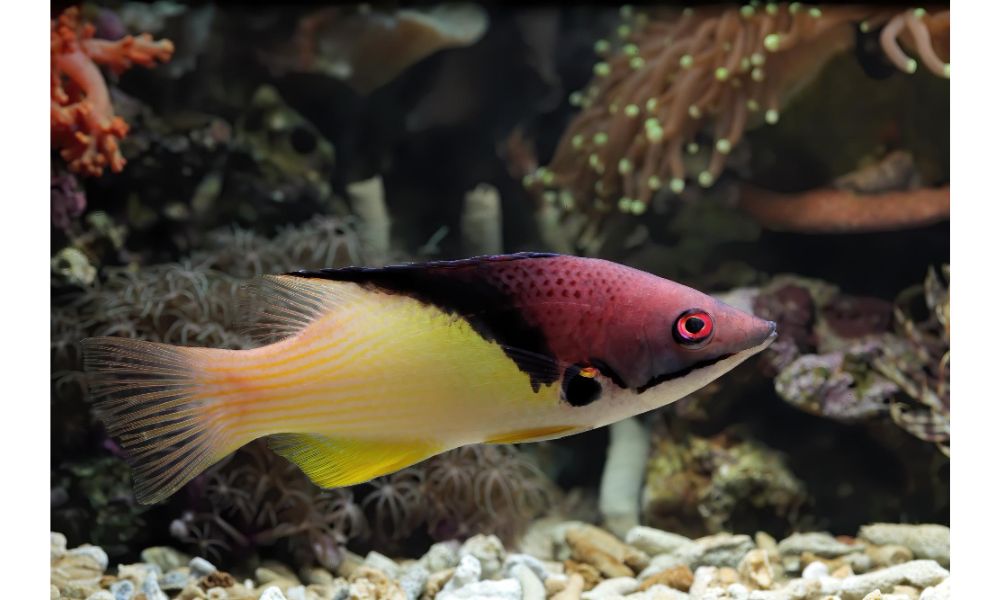
A marine fish that is breathing hard at the surface, hovering near a powerhead, or pumping its gills faster than normal is giving you a useful warning. Saltwater fish breathing fast is not a diagnosis by itself. It is a symptom that usually points to one of a few urgent problems – low oxygen, irritation of the gills, poor water quality, sudden stress, or early disease.
The mistake many keepers make is treating the symptom before identifying the cause. Extra aeration may buy time, but it will not solve gill flukes. A medication may seem logical, but it can worsen an oxygen crisis if the fish is already struggling in a poorly aerated system. The right response starts with observation, then a fast check of the environment, and only then a treatment decision.
When saltwater fish breathing fast is an emergency
Rapid breathing becomes especially serious when it appears together with gasping at the surface, flared opercula, hanging in the flow, loss of balance, darkened color, or refusal to eat. If multiple fish show the same sign at once, think environmental problem first. If only one or two fish are affected, disease or localized injury becomes more likely.
Look at timing as well. A fish that begins breathing rapidly right after shipping, transfer, aquascaping, aggression, or a major water change may be reacting to stress or unstable water chemistry. A fish that worsens over several days, develops mucus on the gills, scratches, or isolates itself may be dealing with parasites or infection.
Do not wait for obvious collapse. Fish can compensate for reduced gill function for a while, then deteriorate quickly.
The first check: oxygen and water quality
In many marine systems, the simplest explanation is the correct one. Oxygen can fall faster than aquarists expect, especially at night, during heat spikes, after equipment failure, or in overstocked tanks. Heavy bacterial blooms, excess organics, and medications that reduce dissolved oxygen can make the situation worse.
Start by checking whether all pumps, skimmers, and surface agitation are working normally. A blocked air intake on the skimmer, a failed circulation pump, or a covered surface can reduce gas exchange enough to trigger distress. If fish gather near the overflow or strongest current, they are often seeking better oxygenated water.
Then test the basics immediately: ammonia, nitrite, pH, temperature, and salinity. In a mature marine aquarium, any detectable ammonia deserves attention. Ammonia damages gill tissue and makes breathing more difficult even before fish show severe external signs. High temperature lowers oxygen availability while increasing metabolic demand, so fish breathe faster. Salinity swings after top-off errors or water changes can also stress the gills.
If numbers are questionable, correct them carefully. Large corrections done too fast can add a second stress event.
Gill disease is a common reason fish breathe hard
If the environment appears acceptable and the problem is not affecting every fish equally, look closely at the gills and behavior. Saltwater fish breathing fast often reflects a direct gill problem. The fish may still swim normally at first, but respiration rises because the gill surface is inflamed, blocked with mucus, or damaged.
Gill flukes are a classic example. Fish may breathe heavily, flash against objects, clamp fins, or produce excess mucus. Sometimes one operculum appears more active than the other. Marine ich and velvet can also attack the gills before skin spots are obvious. That point matters because many keepers wait for visible white dots and miss the earliest stage of serious disease.
Velvet deserves special caution. Fish may breathe extremely fast, become reclusive, lose appetite, and die quickly, often before a heavy external coating is seen. In contrast, flukes may progress more slowly, and bacterial gill disease may follow prior damage from stress, parasites, or poor water quality.
A fish with pale, swollen, or very dark gills is not normal. If you have the experience and setup to inspect closely in quarantine, do it. If not, rely on the pattern of symptoms rather than guessing from respiration alone.
Stress causes fast breathing too, but stress is not a final answer
Stress is often named too quickly. It is true that newly imported marine fish frequently breathe faster after capture, transport, and acclimation. Tangs, wrasses, anthias, and other active species may show temporary elevated respiration after chasing, handling, or territorial disputes. But stress should be treated as a trigger or contributing factor, not a complete diagnosis.
Ask what is causing that stress. Aggression from tankmates? Incorrect temperature during acclimation? A pH swing between shipping water and tank water? Copper in quarantine at the wrong concentration? A fish that is breathing rapidly because it was harassed all day still needs a practical intervention, such as separation, more shelter, or revised stocking.
This is where experienced observation matters. A fish that calms down in a dim, quiet quarantine tank may simply need recovery time. A fish that continues to breathe hard despite a stable environment usually has more than handling stress.
What to do in the first hour
The first hour should be about stabilization and information, not random treatment. Increase surface agitation and confirm that aeration is strong. If a skimmer is present and functioning, keep it running unless a specific treatment requires otherwise. Check temperature and avoid overheating. Test ammonia and nitrite right away, and perform a measured water change if results or recent events suggest water quality trouble.
At the same time, reduce nonessential stress. Dim the lights. Stop chasing the fish with nets. Pause feeding if the fish is in obvious respiratory distress, because uneaten food will only burden the system. Watch whether all fish are affected or only one species or individual.
If the fish is in a display and disease is suspected, avoid the common mistake of adding medication before knowing whether the tank contains invertebrates, live rock, or other animals that make treatment unsafe or ineffective. A hospital or quarantine setup is often the correct place to investigate and treat.
How pattern recognition helps with diagnosis
A useful practical question is this: are you seeing a tank problem, a species problem, or an individual problem?
If all fish are breathing hard, suspect oxygen shortage, toxic exposure, temperature issue, or acute water quality failure. If one species is affected first, look at its sensitivity. Tangs and angels may show gill irritation early, while more tolerant fish appear normal for longer. If one individual is affected, think parasites, localized infection, injury, or severe social stress.
Also look for associated signs. Surface gasping points more strongly toward oxygen limitation or widespread gill compromise. Flashing suggests irritation, often parasitic. Excess mucus can indicate flukes, brooklynellosis, or severe gill reaction. Fine dusting with rapid decline is highly suspicious for velvet. Heavy breathing with swollen abdomen and poor buoyancy may involve broader systemic disease, not just the gills.
This is why visual diagnosis matters so much in fish health work. Good photographs, representative case examples, and side-by-side comparison of symptom patterns are often what separate correct treatment from expensive trial and error.
Treatment decisions depend on the cause
There is no single cure for fast breathing. If oxygen is low, the priority is immediate gas exchange and correction of the mechanical or husbandry failure. If ammonia is present, protect the fish through water quality correction and system review. If parasites are likely, choose treatment based on the suspected organism and move with purpose, because gill parasites can kill before skin lesions become dramatic.
That said, treatment always has trade-offs. Formalin-based approaches may be effective in some situations, but they require strong aeration and experienced handling. Copper may be necessary for certain marine protozoan diseases, but incorrect dosing can add stress or fail entirely. Freshwater dips can provide diagnostic clues and short-term relief for some gill parasites, yet they are not suitable as a complete plan in every case.
For serious keepers, this is exactly why a structured diagnostic reference is essential. Gerald Bassleer Books has built its reputation on moving from visible symptoms to likely diagnosis and then to practical treatment choices without wasting time on vague hobby advice.
Prevention is mostly about stability and observation
Most episodes of rapid breathing are easier to prevent than to rescue. Stable salinity, dependable aeration, reasonable stocking, disciplined quarantine, and close daily observation do more than any emergency bottle on a shelf. Fish usually show subtle changes before they reach the stage of surface gasping.
Watch resting respiration when your fish are healthy. Learn what normal looks like for each species in your system. That baseline gives you a major advantage because early respiratory change is often the first sign that something is wrong.
When a marine fish starts breathing fast, act as if the symptom matters, because it does. The best outcomes usually come from calm observation, immediate environmental checks, and treatment aimed at the real cause rather than the most obvious sign.
Recent Comments