



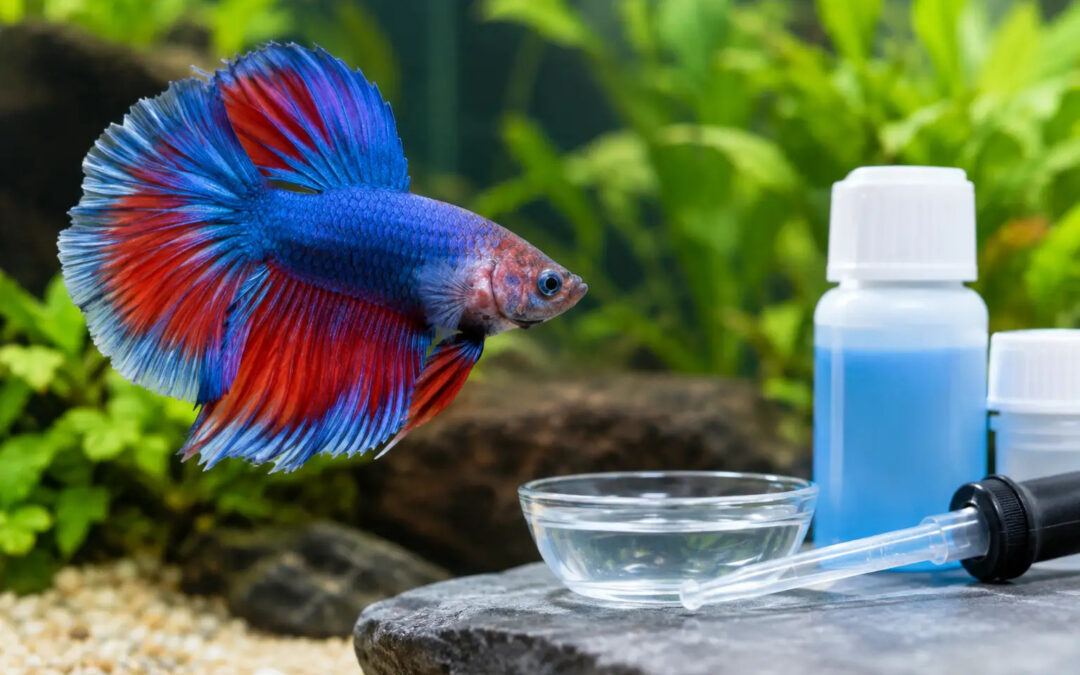
A betta with a swollen, protruding eye needs more than a quick dose of medication. Betta popeye recovery depends on whether the swelling began with an injury, poor water quality, a localized infection, or a more serious internal disease. The eye may look alarming, but the correct response is methodical: assess the fish, stabilize its environment, identify the likely cause, and watch closely for change.
Popeye is the common name for exophthalmia, meaning abnormal protrusion of one or both eyes. It is a visible symptom, not a diagnosis. Treating every case the same way is one of the main reasons recovery is delayed.
What Betta Popeye Recovery Depends On
The first diagnostic question is whether one eye or both eyes are affected. A single swollen eye is often associated with trauma, such as a collision with hard decor, a fight, rough netting, or injury from a sharp artificial plant. Localized bacterial infection can also affect one eye, especially when the surface is cloudy, damaged, or surrounded by redness.
When both eyes protrude, the concern shifts toward a systemic problem. Chronic exposure to ammonia or nitrite, severe bacterial infection, internal fluid imbalance, organ dysfunction, and generalized edema can all produce bilateral popeye. If the betta also has raised scales, abdominal swelling, rapid breathing, loss of appetite, or lethargy, do not treat the eye as an isolated injury.
Look carefully at the eye itself. A clear but enlarged eye may have a better outlook than one that is opaque, bloody, ruptured, or covered in a white film. Also inspect the body. Frayed fins, ulcers, red streaking, excess mucus, clamped fins, and abnormal feces provide important clues about the underlying condition.
Photograph the fish before treatment and again each day in similar lighting. Popeye changes slowly enough that memory can be misleading. Clear images make it easier to judge whether the eye is stabilizing, becoming more cloudy, or gradually returning toward normal size.
Start With the Aquarium, Not the Medicine Bottle
Poor water conditions can cause popeye directly or make a mild injury progress into infection. Test the aquarium water immediately for ammonia, nitrite, nitrate, pH, and temperature. Ammonia and nitrite should be zero. Nitrate should be kept low through regular maintenance, although the appropriate range depends on the aquarium’s stocking level, planting, feeding, and source water.
Perform a partial water change with temperature-matched, conditioned water if testing shows a problem or if the tank has been neglected. Avoid dramatic swings in temperature, pH, or hardness. A stressed betta does not benefit from being moved repeatedly or exposed to sudden large corrections unless water quality is dangerous.
Remove decaying food, dead plant material, and obvious waste. Check the filter flow as well. Bettas need clean, oxygenated water, but many struggle in a strong current. If the fish is being pushed around the aquarium, reduce the flow without reducing filtration capacity.
A hospital aquarium is useful when medication is needed, when the main aquarium contains shrimp or sensitive plants, or when the betta requires close observation. It should be heated, filtered gently, fully conditioned, and large enough to remain stable. A bare-bottom setup makes waste removal and appetite monitoring easier. Do not move a severely stressed fish into an uncycled container with unstable water unless you are prepared to manage water quality daily.
Do not overlook physical injury
If one eye is swollen but clear, the betta is active, and water tests are good, trauma is a reasonable working diagnosis. Remove sharp decor, abrasive plastic plants, and tight ornaments that can trap or scrape the fish. Then provide excellent water quality and minimal stress.
Not every injured eye requires medication. A clean environment may be enough for mild cases, and unnecessary medication can irritate the fish, disrupt biological filtration, or make it harder to judge the true course of the disease. However, worsening swelling, cloudiness, redness, or reduced activity means the case should be reassessed promptly.
Treat the Likely Cause, Not Just the Swelling
When bacterial infection is likely, use an antibacterial medication labeled for ornamental fish and follow the manufacturer’s directions exactly. This is most appropriate when popeye is accompanied by cloudy eyes, red tissue, ulcers, fin damage, declining appetite, or progressive deterioration. Remove activated carbon or other chemical media that may absorb medication, but keep biological filtration and aeration functioning unless the treatment instructions state otherwise.
Do not combine several medications “just in case.” Stacking products can increase stress and make it impossible to know what is helping or harming the fish. A targeted course, correct dose, stable temperature, and clean water are more useful than a cabinet of overlapping treatments.
Some keepers use magnesium sulfate, often called Epsom salt, to help reduce fluid-related swelling. It can be useful in selected cases, particularly where edema is suspected, but it is not a cure for infection, poor water quality, or internal disease. It also changes water chemistry and should be measured carefully, preferably in a hospital aquarium. Do not add salt casually to a planted community aquarium or one containing species that do not tolerate it well.
If both eyes are swollen and the betta has body swelling or raised scales, the prognosis is more guarded. Supportive care and targeted treatment may still help, but recovery depends on the internal cause. This is where accurate visual diagnosis matters most: a protruding eye paired with dropsy-like signs is not the same clinical picture as a single swollen eye after a decor injury.
Feeding during treatment
Offer small portions of a high-quality betta food once the fish is interested in eating. Remove uneaten food quickly. Fasting a fish that refuses food for a short period is generally safer than allowing food to decay in a treatment aquarium.
Do not force-feed a weak fish. Appetite is useful diagnostic information. A betta that begins investigating food, holding itself upright, and moving normally is often improving before the eye looks normal again.
Monitoring Betta Popeye Recovery
A recovering eye usually stops enlarging first. Over the following days or weeks, the swelling may gradually decrease, the surface may become clearer, and the fish may return to normal feeding and activity. The exact timeline depends on the cause. A mild injury can improve within a week, while a serious infection or systemic disease may take much longer and may leave permanent changes.
Check the fish at least twice daily for eye size, clarity, body posture, respiration, appetite, and waste production. Keep notes rather than relying on a single observation. If the eye ruptures, becomes dark or severely opaque, or the fish develops widespread swelling, rapid breathing, or inability to remain upright, the condition has escalated.
An eye does not always return completely to its previous appearance. Some bettas survive with partial vision loss, scar tissue, or one permanently altered eye. If the fish is active, feeding, and maintaining normal body condition, long-term quality of life can still be good. The practical goal is not cosmetic perfection. It is a comfortable fish with stable health and no progressing infection.
Preventing Another Episode
Once the betta is stable, inspect the aquarium as if you were investigating an injury scene. Replace sharp decor with smooth wood, silk plants, or live plants. Make sure caves and ornaments have no narrow openings that can catch a fish. Maintain a consistent cleaning routine, avoid overfeeding, and test water after equipment failures, missed maintenance, or changes in fish behavior.
Quarantine new fish when possible. Many infections enter established aquariums with new livestock, and a fish already stressed by transport is more vulnerable to disease. Good quarantine is not simply isolation. It is a period for observation, stable water, and early detection of visible symptoms.
The most useful habit is to act when the eye first changes, not after it becomes severely enlarged. A clear diagnosis begins with careful observation, clean water, and a treatment plan that matches the signs in front of you. That disciplined approach gives a betta the best chance to heal.
Recent Comments